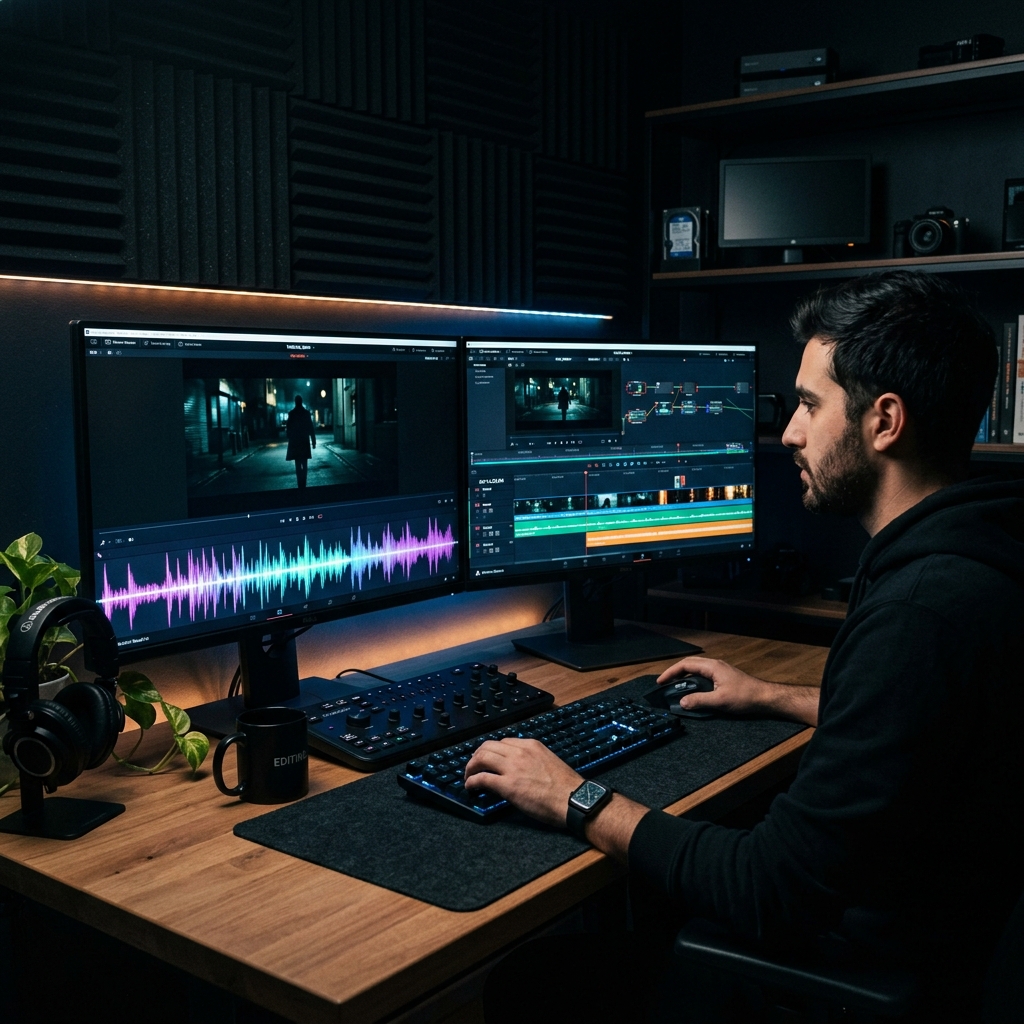
Editing is not just piecing together footage; it is composing a visual symphony. The rhythm of a cut determines how the viewer feels, breathes, and reacts to the unfolding narrative.
The Heartbeat of Motion
Every film has an internal heartbeat. In commercial videography, this heartbeat must sync with the brand's identity. A luxury product film requires long, drawing takes that settle on details, letting the viewers immerse themselves in the texture. Conversely, a high-octane streetwear launch thrives on rapid, syncopated cuts that match the frenetic energy of the streets.
Invisible Transitions & Visual Rhymes
A great cut is often one the audience doesn't notice. Match cuts, motion-blur whip pans, and graphic matches create "visual rhymes." For instance, panning away from a circular lens flare into a circular architectural detail binds different spaces and ideas seamlessly.
"The cut is the silence between notes. It is where the storytelling actually happens."
Sound as the Grid
We edit with our ears first. Sound design dictates where cuts fall. Cutting exactly on a kick drum is a common mistake that can feel mechanical. Instead, cutting slightly before or after a beat, or allowing the audio from the next clip to bleed in early (L-cuts and J-cuts), creates a much more human, cinematic flow.