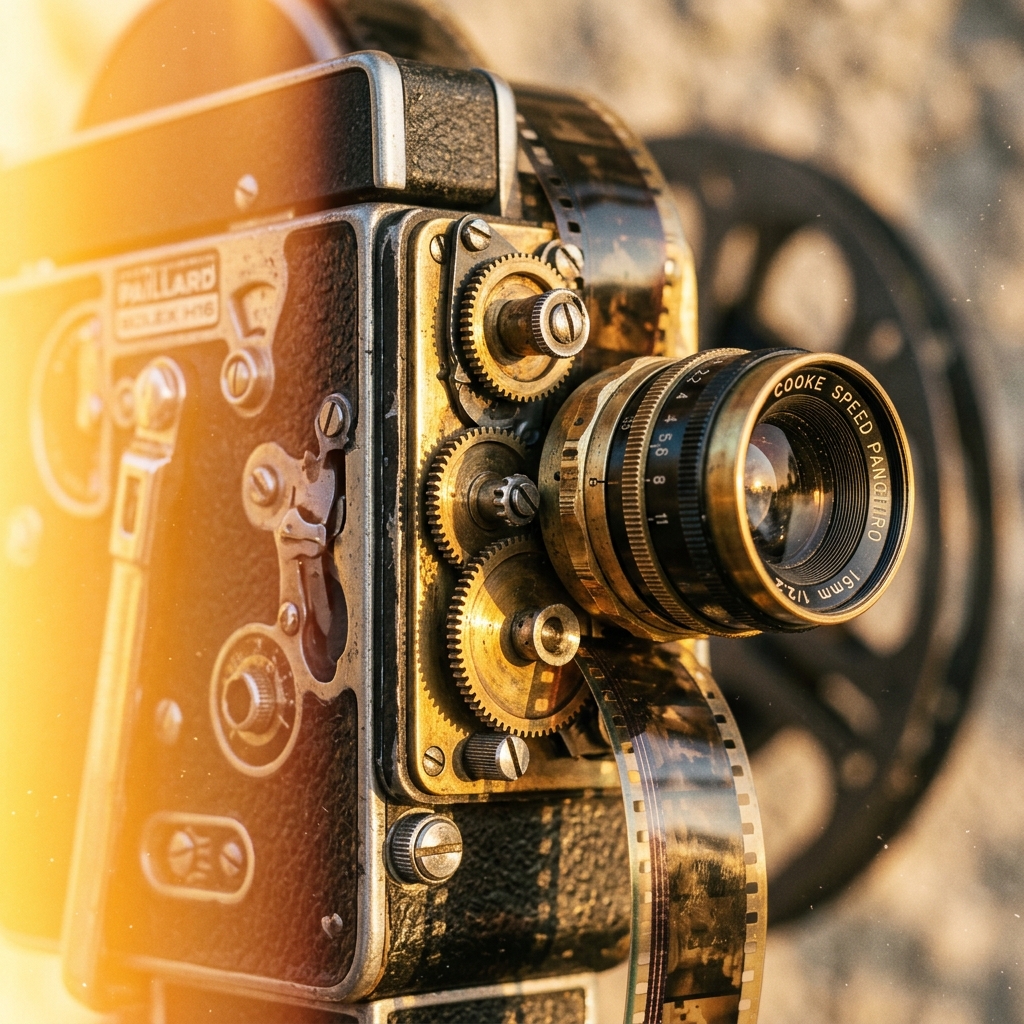
Digital cameras are incredibly sharp, sometimes to a fault. The organic imperfection of 16mm film captures emotion in a way that clinical, ultra-clear digital footage struggle to replicate.
The Physics of Grains
Film grain is not just overlay noise; it is the physical makeup of the image. The silver halide crystals in celluloid clump together differently depending on light exposure. To emulate this digitally, one must apply grain differently in highlights, midtones, and shadows. Shadow grains should be larger and softer, while highlights are cleaner and sharper.
Here is a short breakdown of the process in motion:
Lenses and Diffusion
Before the footage hits your editing software, you must soften the digital sensor's edge. Vintage lenses—such as old Super Takumars or Helios glass—provide natural chromatic aberration and softer edges. Additionally, using subtle diffusion filters like Pro-Mist or Black Glimmerglass helps bloom highlights and soften contrast in-camera.
"Imperfection is the signature of human presence in art."
Color Profiles & Organic Roll-off
The digital highlight clipping is sharp and harsh. Film highlights roll off smoothly. By using logarithmic color profiles (S-Log, Log-C) and custom film emulation LUTs based on Kodak 250D or Fujifilm stock, we can compress highlights and shadow ranges to create that timeless film look.